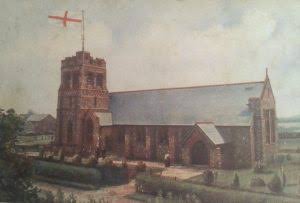
During the late 1990s, I worked on a project called the Orford Memories Project, with North Cheshire College in Warrington, one of my first teaching projects, which focused on collecting archive material from the old village of Orford, and with a group of students, we put together a pamphlet on the history of Orford, A fascinating story that emerged from the project was that of the Rev. George Vale Owen, the first vicar of St. Margaret’s and All Hallows Church, which opened in 1908 (the north-east cornerstone of the church was laid with a Masonic ceremony in October 1907). The Rev. George Vale Owen became deeply interested in spiritualism, experimenting with automatic writing, and became a friend of the Freemason and author Sir Arthur Conan Doyle, who supported Vale Owen in his spiritualist work, and actually visited him in Orford. Vale Owen left the Church and subsequently went on a speaking tour of the USA, publishing a number of works on spiritualism. Vale Owen became involved in the Wimbledon Spiritualist Church, which was officially opened by Vale Owen in 1925.
I wrote a short article on Vale Owen recently, which is part of a possible future project, and this attracted the attention of some of the current members of the Wimbledon Spiritualist Church, which led to a visit by them to Orford, and a history tour of St. Margaret’s Church and the surrounding village, guided by myself. This was followed by a few pints in the Blackburne Arms – the local village pub built in 1928 – and named after the Blackburne family, who had been the owners of Orford Hall, which once stood in what is now Orford Park.
The article on the Rev. George Vale Owen can be accessed for free via my Academia site here: (99+) The Rev George Vale Owen; Spiritualist, Vicar and friend of Sir Arthur Conan Doyle
And the short paper which discusses the cornerstone ceremony during the building of St. Margaret’s Church can be accessed here: (99+) ‘Cornerstones and Keystones A Very Public Masonic Ceremony’, Philalethes: The Journal of Masonic Research & Letters, Vol.68, (Winter, 2015), pp.101-105.
I have written much on Sir Arthur Conan Doyle over the years, and an article of mine, written on his involvement with the Authors’ Lodge can be read here: (99+) ‘Authors’ Lodge: A History’, Freemasonry Today, No.15, (Summer/Autumn, 2011), pp.45-6.


 A new short paper of mine, entitled ‘The Strange Case of the Lambert de Lintot Engravings and the Foundation Chapter of Unanimity No.82’, which was published in the Transactions of Illinois Lodge of Research, Vol.32, (2003), pp.9-11,
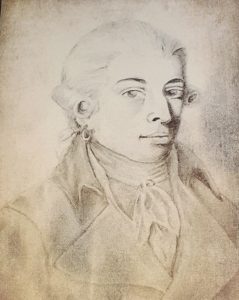
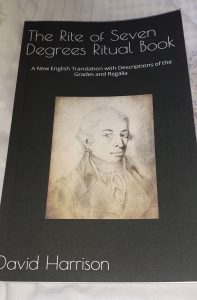 Around three years ago, Lewis Masonic published my work on the Rite of Seven Degrees, a Rite that existed in London during the eighteenth century and was managed by the French born Freemason Pierre Lambert de Lintot. This work, published in hardback, examined the life of Lambert de Lintot, his artwork and his ritual and minute book, which was translated from the late eighteenth century French, and was a strict presentation, page-by-page, line-by-line, in keeping to the actual manuscript, which is kept by the Library and Museum of Freemasonry at UGLE. As such, the original work was a historical presentation for researchers and Masonic scholars.


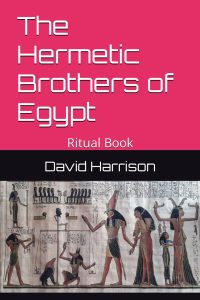 I have a new book out with Gjarper Publishing entitled The Hermetic Brothers of Egypt, which was an experiment in writing a non-Masonic ritual based on an Occult Revival-era reference made by Kenneth Mackenzie, a friend and colleague of John Yarker. Mackenzie mentioned the title of the Order a few times in his writings, but there is no reference to the actual ritual. As an experiment, I wrote the ritual based on themes and ideas mentioned by both Mackenzie and Yarker, and decided to publish the result, which gives a hint of my main project – a biography of John Yarker, which will be published in May this year.
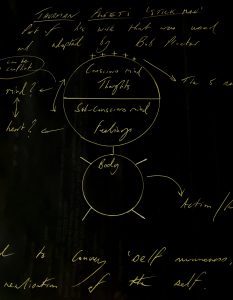 This short paper aims to explore how certain themes of self-improvement that occur within Freemasonry, can be found in the teachings of certain self-help educators such as Bob Proctor. Some of Proctor’s ideas were inspired by Dr Thurman Fleet, a chiropractor practitioner, and the paper will also discuss the popular diagram of the stickman, a diagram used by both Fleet and Proctor, which not only became a vital teaching aid for many in the self-improvement industry, but became a symbol to aid one’s progression for motivation and to discover the self. The paper was first published in the English language in the Philalethes: The Journal of Masonic Research & Letters, Vol.76, No.3, (2024), pp.118-130, and is available for free download from my academia profile by clicking here:
 Earlier this year, I presented this paper to the Societas Rosicruciana in Anglia, and I now have it published in the latest volume of
 The magician and Occultist Aleister Crowley appears on the cover of The Beatles’ 1967 masterpiece Sergeant Pepper’s Lonely Hearts Club Band, situated on the back row of a crowd of people that the band admired. Crowley famously put forward in his book Magick, the practice of reverse speech, something that the Beatles experimented with in their recordings at this time. This short paper will explore how Crowley and other writers of the Victorian era inspired members of the band, and how spirituality and elements of the counter-culture of the late 1960s assisted to create an interest in the esoteric, which in turn inspired the music of the band.

 The new hardback edition of Steve Savedow’s Goetic Evocation by Hadean Press is a welcome re-presentation of a great occult work. Besides being a beautiful hardback book in red cloth binding, containing gold stamp on front and spine, and being printed on quality paper, this edition certainly does justice to an in-depth exploration of the Goetia; presenting its practice, its history and Savedow’s own experiences, which are meticulously detailed. These experiences give a valuable insight into the practical aspects of Goetia, its dangers and its outcomes, and the resulting descriptions of the Demonic Universe make for a fascinating section to the book.